Why Scenario-Based Training is a Game-Changer for Police Officers
By Resolution Tactics
Traditional police training has long relied on live-fire range time. Officers line up, shoot paper targets, and drill marksmanship under calm, controlled conditions. It's important for basic firearms proficiency, but it falls short when it comes to what officers actually face on the street.
Real-world encounters are messy, fast-moving, and high-stress. They demand split-second decisions, clear communication, proper de-escalation, and the judgment to know when not to use force. That's where scenario-based simulator training stands apart, and the data proves it delivers measurable results that range time alone simply cannot match.
The clear advantage at Resolution Tactics: real-world decision-making under pressure
In a high-fidelity 300-degree simulator like the one at Resolution Tactics, officers step into realistic, dynamic scenarios that mirror the calls they answer every day. They practice threat assessment, verbal commands, de-escalation tactics, and use-of-force decisions, all without live fire or safety risks.
This isn't just "more training." It's better training that builds the exact skills officers need when adrenaline is pumping and seconds matter.
Scenario-based police training: the numbers don't lie
Recent large-scale studies show scenario-based training produces results traditional range-focused training rarely achieves:
- A rigorous trial with 1,843 officers in Avon and Somerset Police (UK) found that scenario-based training reduced the weekly likelihood of using force by 10.9%. Public injuries during force incidents dropped by roughly one-third, with no increase in officer injuries.
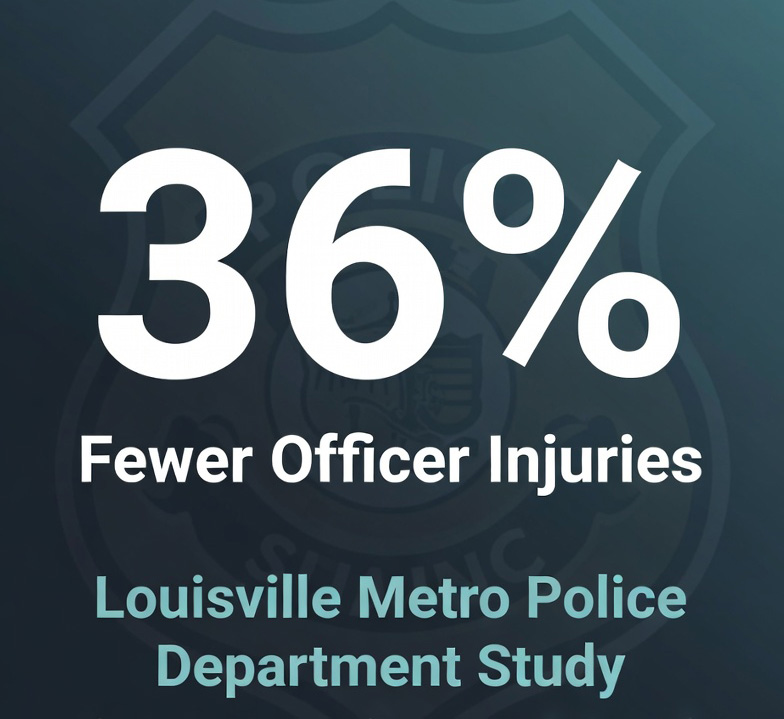
- Louisville Metro Police Department's ICAT de-escalation program (heavy on scenario-based practice) delivered 28% fewer use-of-force incidents, 26% fewer citizen injuries, and 36% fewer officer injuries compared to officers who didn't receive the training.
- The University of Chicago Crime Lab's evaluation of the Situational Decision-Making (Sit-D) program in Chicago PD showed a 23% reduction in use-of-force incidents.
Why traditional range time alone falls short
Live-fire range sessions are excellent for trigger control and accuracy, but they train officers in a vacuum. There's no role player, no changing environment, no verbal interaction, and no real stress. Officers learn how to shoot, but not when or whether they should.
Scenario-based training closes that gap. It builds muscle memory for the full spectrum of policing: communication, positioning, de-escalation, and appropriate force application. The result? Officers who make better decisions faster and resort to force less often.
The bottom line for law enforcement leaders
If your agency is still relying primarily on traditional range time for use-of-force training, you're leaving critical skills on the table. Scenario-based simulator training doesn't replace live-fire practice, it makes it far more effective by adding the decision-making layer that real encounters demand.
At Resolution Tactics in Mason, Ohio, we've built a dedicated high-end simulator facility specifically for this purpose. Chiefs and training officers in the Greater Cincinnati and Southwest Ohio region tell us the difference in officer confidence and performance is immediate and measurable.
Ready to give your officers the training edge they deserve? Contact us today to schedule a demonstration or group session. The data is clear: better training saves lives, reduces liability, and strengthens community trust.
Shari and Scott
Resolution Tactics, Mason, Ohio